
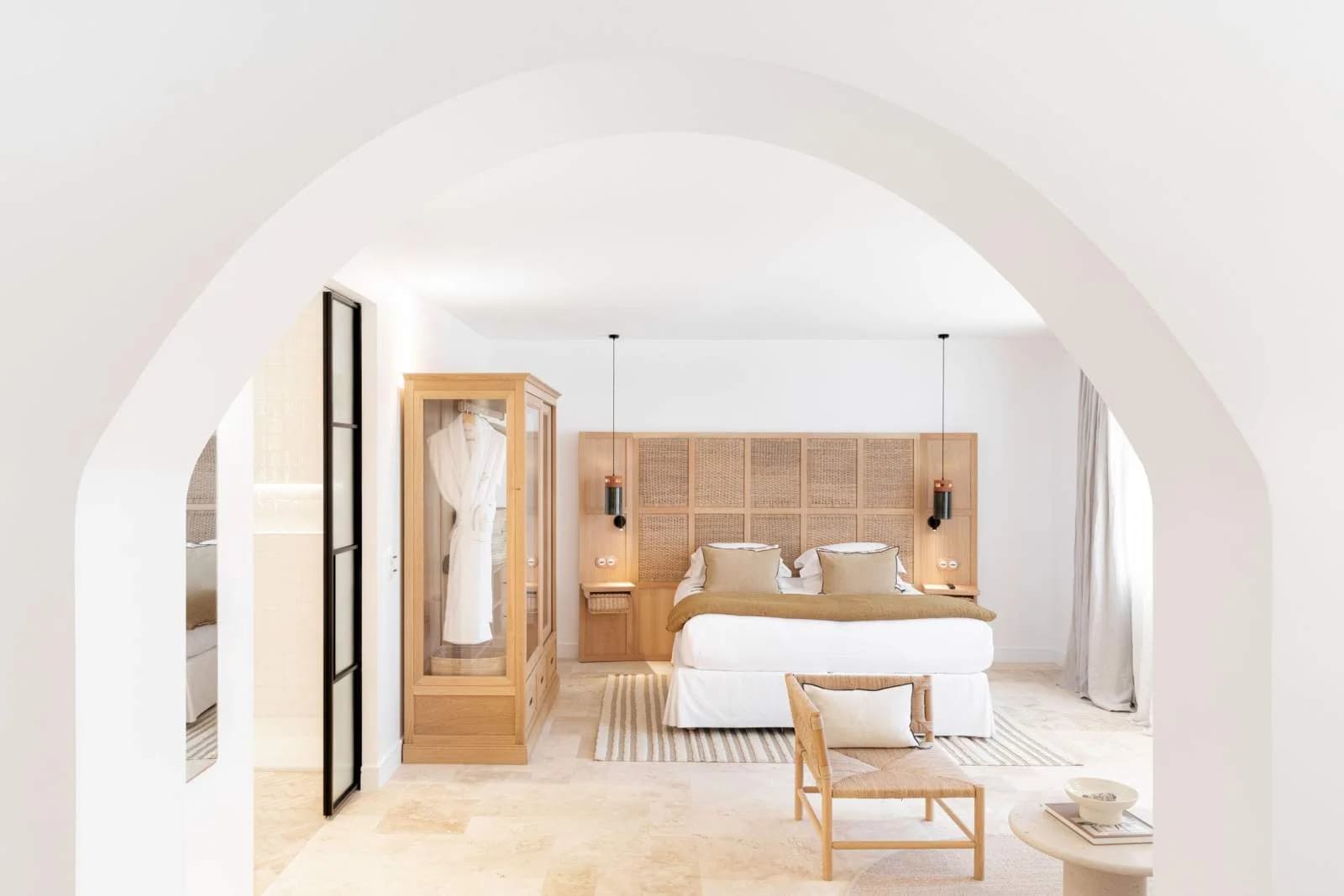
The Psychology of Materials: Marble, Wood, and Light orchestration
BY Jules PEULET
Luxury is a tactile reality before it is visual. Step inside the sensory engineering of the world’s finest hotel suites—where raw travertine, open-pore walnuts, living bronzes, and precise light spectrums are meticulously orchestrated to construct the ultimate private sanctuary for the human mind.
The Psychology of Materials: Marble, Wood, and Light orchestration
In the saturated landscape of ultra-luxury hospitality, visual aesthetics have reached a point of global homogenization. Digital screens and high-production photography have made it profoundly easy for any property to replicate the appearance of luxury. True differentiation, therefore, has receded from the visible spectrum into the tactile, acoustic, and emotional realms. The modern elite traveler no longer evaluates a signature suite merely by its structural layout or its historical coordinates; they measure it by its sensory resonance.
When a guest enters a master suite after an exhausting long-haul flight or an intense corporate negotiation, their first interactions with the environment are entirely physical and evolutionary. The skin, the feet, and the subconscious mind register the space long before the intellect processes the design style. The cold, unyielding weight of a synthetic stone floor communicates an immediate corporate falseness, whereas the soft, cellular warmth of oil-finished timber underfoot registers as an ancestral protective sanctuary. Luxury hospitality has entered the era of sensory engineering. This comprehensive structural guide decodes the psychological impact of raw materials, analyzes the emotional behavior of noble stones, rare woods, and living metals, and details how the invisible interaction of light and material texture constructs the ultimate private sanctuary for the human mind.
1. Stones of Character: The Emotional Resonance of the Lithic Envelope
For generations, the default luxury signifier for luxury hotel bathrooms and entryways was monolithic white marble—specifically high-polish Carrara or Calacatta. This stone was utilized by grand corporate hospitality groups to project a uniform message of high financial expenditure and sterile cleanliness. However, to the modern design connoisseur, this high-gloss, ultra-reflective white stone has become synonymous with institutional coldness, mimicking the clinical atmosphere of commercial bank lobbies rather than the welcoming embrace of a private estate.
The contemporary architectural shift prioritizes stones of profound character and organic texture, shifting the narrative from performative opulence to deeply grounded emotional security. Elite designers are increasingly abandoning polished white surfaces in favor of highly porous, tactile minerals such as Italian travertine, translucent Iranian alabaster, and dramatically veined onyx. Travertine, when left un-filled and treated with an unpolished, matte honed finish, behaves completely differently under light than traditional marbles. Its natural structural cavities and organic micro-fissures absorb glare, softening the internal atmosphere of a master bathroom or bedroom salon. The stone feels physically warm to the touch, and its earthy color palette—ranging from soft cream to deep Roman nocé—establishes an immediate psychological connection to ancestral landscapes.
Beyond travertine, the strategic positioning of rare minerals like onyx or alabaster introduces a mystical, almost ethereal dimension into the suite layout. When backlit behind custom vanity panels or headboard partitions, these stones reveal their internal crystallization structures, turning raw geology into a soft, ambient light source that calms the human nervous system. This intentional stone curation is a critical marker of modern spatial luxury, as we detail extensively in our technical study on Pierces de Caractère: Beyond White Marble, the Rise of Travertine, Alabaster, and Onyx, which explores the geological sourcing defining tomorrow's private wellness hubs.
2. The Essence of Wood: Timber as an Acoustic and Thermal Sanctuary
If stone represents the permanent, protective bones of a luxury suite, wood functions as its living, breathing skin. From a psychological perspective, wood is one of the few interior materials capable of simultaneously altering the thermal perception and acoustic signature of a large volume. A room wrapped in high-gloss synthetic laminates or cold drywall panels feels physically colder and structurally hollow, whereas a space lined in authentic, open-pore timber paneling registers immediate psychological warmth, lowering a resident's heart rate upon entry.
The leading interior architects of our era treat timber not as a decorative veneer, but as a structural instrument to orchestrate intimacy. The modern masters work closely with elite artisanal cabinetmakers to utilize advanced wood-processing techniques that honor the raw state of the tree. Techniques like sandblasting oak to expose its deep, natural grain patterns, utilizing Shou Sugi Ban (the traditional Japanese art of charring wood) to achieve a deep, matte, velvet-black carbonized protective outer layer, or sourcing rare precious essences like walnut burl, bog oak, or figured sycamore are standard practice in elite design.
When these premium timbers are integrated into the walls of a grand salon or master bedroom, they act as massive, natural acoustic dampeners. Unlike hard drywalls that reflect sound waves and cause minor echoes, open-pore wood surfaces possess a natural cellular structure that absorbs high-frequency distortions, wrapping the suite in an immediate, velvety quietness. The physical presence of natural oils and waxes used to finish these timbers creates a subtle, completely non-chemical olfactory signature that immediately communicates safety and high craftsmanship. To understand the profound level of human skill required to manipulate these noble timbers and to explore how custom millwork redefines hospitality comfort, access our dedicated feature on L'Essence du Bois: The Master Artisans and Precious Timbers Warming the Modern Suite.
3. Interior Jewelry: Living Metals and Artisanal Finishes
The ultimate quality of a luxury hotel suite is explicitly confirmed by its micro-details. While the main walls and furnishings establish the broad layout, it is the metal hardware—the touchpoints that the guest must physically grasp multiple times per day—that delivers the final verdict on the integrity of the space. In standard premium hospitality, hardware is treated as a mass-commodity item, usually consisting of chrome-plated steel or highly lacquered polished brass that remains frozen in a synthetic state of perfection.
True luxury architecture completely rejects these dead, industrially lacquered surfaces, choosing instead what designers call "living metals." These include unlacquered brass, sand-cast solid bronze, gunmetal iron, and blackened copper. These metals are entirely untreated by synthetic chemical sealants, meaning they remain open to environmental interactions. Over the course of a guest's stay, as hands turn the heavy entrance handle, manipulate the custom bathroom vanity taps from heritage brands like Vola or Lefroy Brooks, or operate the toggles of solid brass electrical switches from specialized fabricators like Meljac, the metal begins to oxidize naturally.
This natural oxidation process creates a beautiful, completely unique patina that tells the physical story of the building's usage. The metal darkens in areas left untouched and polishes to a warm, brilliant gold on the exact edges where human fingers make contact. This creates an immediate sensory connection across time; the material possesses an authentic weight and a satisfying mechanical resistance that mass-produced hardware can never simulate. To explore the world of high-end hardware curation and understand how these artisanal metal finishes function as the definitive markers of taste, explore our comprehensive design analysis, La Bijouterie d'Intérieur: The Power of Custom Brass, Bronze, and Artisanal Hardware.
4. Tactile and Textile Architecture: The Soft Infrastructure of Rest
The physical climax of any hotel stay occurs when the guest transitions from the active spaces of the salon into the intimate embrace of the sleeping quarters. At this exact moment, the primary interaction with the architecture shifts entirely from the eyes to the skin. The choice of textiles inside a master suite is not an aesthetic afterthought; it constitutes a highly advanced soft infrastructure designed to facilitate deep, restorative cellular recovery.
Modern suite curation involves an intensive layering of varied material weights, weaves, and fibers to construct a complex tactile landscape. The journey starts with the underfoot transitions: stepping off a smooth hardwood floor onto a hand-tufted silk and Tibetan wool rug from premier houses like CC-Tapis provides an immediate sensation of luxury and weight. The bed architecture itself is structured like a multi-layered sensory ecosystem. Instead of standard, highly starched commercial cotton sheets that feel cold and slippery against the skin, elite designers introduce high-thread-count long-staple Egyptian cotton percales, raw washed linens that offer a distinct structural micro-massage, and heavy pure silk or cashmere throws from historical mills like Loro Piana.
The surrounding walls of the sleeping sanctuary are increasingly wrapped in stretched fabric paneling—such as mohair velvets, Belgian linens, or raw slub silks—which completely eliminates any harsh light reflections and forms a secondary layer of acoustic insulation. The human body subconsciously senses this complete lack of environmental friction, allowing the nervous system to drop its defensive posture and fall into a profound, undisturbed state of rest. For an exhaustive breakdown of how premium fabric weights and fiber selections transform the mechanics of sleep, read our specialized study, Le Tactile & le Textile: How Silk, Cashmere, and Fine Weaves Engineer the Ultimate Sleep Sanctuary.
5. Photon Scenography: Light as the Ultimate Fluid Material
Every noble stone, rare timber, and texturized fabric integrated into a master suite remains entirely inert until it is activated by light. Light is not an external utility added to illuminate a room; it is a fluid, structural building material that dictates how the human eye perceives volume, depth, and texture. The ultimate hallmark of an architect-led suite is its absolute control over photon behavior, moving far away from the uniform, aggressive downlighting layouts that ruin the atmospheric quality of lesser spaces.
Master architects divide lighting design into a strict dual-narrative system: the Diurnal Dance and the Nocturnal Scenography. During daylight hours, the suite layout is engineered to maximize, direct, and soften natural sunlight. Windows are framed by multiple tracks of custom drapery, allowing the resident to filter glare through semi-translucent linen sheers while allowing natural shadows to play across matte plaster walls. This active integration of changing natural light patterns grounds the guest in the temporal rhythm of the destination, completely mitigating the cognitive disorientation caused by global time-zone travel.
As night falls, the Nocturnal Scenography takes complete control of the volume. The strategy shifts entirely to indirect, low-level accentuation. Recessed ceiling downlights are used with extreme restraint or completely eliminated. Instead, illumination emerges from concealed warm-LED light reveals cut into the baseboards, behind architectural headboards, and within custom cabinetry trims. Crucially, the quality of this light is measured by its Color Rendering Index (CRI) and its absolute temperature warmth.
Elite suites utilize luminaires with a minimum CRI of 95, ensuring that the natural deep reds of walnut timbers and the warm gold of veined travertines are rendered with absolute chromatic fidelity. At night, temperatures drop to an enveloping 2200 Kelvin, mimicking the soothing spectrum of candlelight. This precise light engineering completely suppresses cortisol production and naturally stimulates melatonin creation, wrapping the entire multi-room space in a calm, protective atmosphere.
6. The Aesthete's Insight: The Pitfalls of Material Extremism
At La Suite, our critical reputation relies on our willingness to dismantle design myths and evaluate high-end hospitality spaces through a lens of uncompromising operational reality. While the intense focus on noble, untreated raw materials has elevated modern interior architecture to historic heights, it has simultaneously introduced distinct functional vulnerabilities that the demanding traveler must understand before booking.
The primary pitfall of modern material extremism is the fragility of natural patinas vs. the reality of commercial cleanliness. When an architect insists on utilizing completely unsealed, hyper-porous stones like raw Turkish travertine or untreated Belgian blue stones on master vanities, the material becomes highly susceptible to cosmetic damage. A simple drop of spilled lemon juice, an acidic facial serum, or a ring of water left beneath a glass will permanently etch or stain the surface within minutes. In several highly praised design properties, the desire for an unblemished, magazine-ready stone aesthetic forces hotel cleaning crews to utilize heavy, aggressive chemical sealants behind the scenes. This completely suffocates the stone's natural open pores and ruins the very matte, tactile texture that the architect originally promised.
Furthermore, the integration of precious, historical timbers on main wall panels frequently conflicts with modern climate control and humidity realities. In grand historic properties that have been retrofitted with powerful, dry central air conditioning systems, wood panels that have not been allowed to settle or are improperly decoupled from the core concrete structures will begin to warp, crack, or creak loudly as the humidity drops. This creates structural popping noises throughout the night that severely disrupt the sleep patterns of sensitive guests.
Finally, the trend toward absolute tactile minimalism—exemplified by omitting metal trim, removing physical door handles in favor of flush magnetic touch-latches, or choosing highly sculptural, completely un-upholstered stone chairs—regularly results in an ergonomic failure.
Our definitive guidance for the design-literate traveler is clear: always cross-reference a suite’s material palette with your operational intent. If you are checking in for an intensive, high-productivity business trip where you will be working from your room, prioritize spaces designed by masters like Jean-Michel Wilmotte or Joseph Dirand, who effortlessly balance noble materials with flawless commercial durability and absolute functional lighting ergonomics. Save the ultra-porous, highly sensitive, and un-upholstered raw mineral concepts for shorter, purely observational design weekenders where visual and tactile inspiration take precedence over total daily durability.
The Curation Hub: Material Signatures to Know
The Travertine Sanctuary (As seen in Joseph Dirand Designs)
Dominant Materials: Unpolished Roman Travertine, Honed Plaster, and Matte White Oak.
Sensory Impact: Absolute visual stillness, heavy solar heat absorption, and total glare reduction.
Best Suited For: High-stress executive decompression and total mental resetting.
The Cinematic Carbon Suite (As seen in Hugo Toro Projects)
Dominant Materials: Shou Sugi Ban Wood, Heavy Mohair Velvets, and Non-Lacquered Oxidizing Brass.
Sensory Impact: Deep acoustic containment, rich olfactory signatures, and changing tactile patinas over time.
Best Suited For: Creative direction work, evening entertainment, and deep cultural immersion.
The Monolithic Mineral Retreat (As seen in Studio KO Spaces)
Dominant Materials: Multi-Veined Rosso Levanto Marble, Translucent Alabaster, and Reclaimed Walnuts.
Sensory Impact: High-contrast visual narrative, dramatic lighting penetration, and a profound feeling of historical weight.
Best Suited For: Long-form writing retreats and architectural purists seeking radical isolation.
The Soft-Shell Apartment (As seen in Gilles & Boissier Portfolios)
Dominant Materials: Stretched Silk Wallcoverings, Cashmere Draperies, and Matte-Waxed French Oaks.
Sensory Impact: Total high-frequency noise absorption, complete environmental softness, and zero friction for the skin.
Best Suited For: Fashion week preparations, elite luxury hosting, and recovery focused sleep.
Conclusion: The Ultimate Material Truth
The ultimate luxury of a signed suite cannot be calculated by looking at a pixelated rendering or tracking a property’s digital PR output; it is found exclusively in the unyielding truth of its physical materiality. As the global hospitality market continues to saturate with derivative visual styling, the properties that command true authority and long-term asset value are those that invest heavily in the timeless architecture of the senses. A masterfully engineered suite—where raw travertine grounds the feet, open-pore walnuts absorb the noise of the metropolis, living bronzes record the passage of time, and 2200K photon streams calm the central nervous system—is no longer a simple place of lodging. It is an active medical instrument for cognitive restoration, a defensive shield against global sensory static, and the absolute pinnacle of high-end living.
To explore these material realities further and locate the exact property whose sensory blueprint matches your personal and operational requirements, we invite you to access our curated network of global design guides, independent regional breakdowns, and raw, clinical suite evaluations. True travel luxury is no longer about checking into an exceptional address; it is about the uncompromising experience of inhabiting one.
Frequently Asked Questions
Why does a guest's body feel physically warmer in a room lined with wood than in a room lined with drywall?
This is driven by a thermodynamic reality known as thermal effusivity. Drywall and synthetic laminates possess a higher rate of thermal effusivity, meaning they rapidly draw heat away from the human body when contact is made, registering psychologically as cold. Natural wood, conversely, possesses low thermal effusivity; its dense cellular structure behaves as a natural thermal insulator, storing heat energy and reflecting it back to the skin, which immediately registers in the human nervous system as a comforting, protective environment.
What is the functional danger of hiding light sources entirely behind custom wood or stone millwork?
While entirely concealed indirect light reveals create a stunning, low-glare atmospheric volume, they completely lack what lighting engineers call "task illumination." If a suite relies exclusively on hidden ambient strips, it fails the basic laws of human ergonomics. The guest will struggle with significant eye strain when attempting to read a document at the desk, distinguish dark wardrobe colors inside closets, or achieve accurate, neutral illumination over a master bathroom vanity for morning grooming.
How does unlacquered "living metal" help optimize the anti-microbial properties of a high-end suite?
Beyond its changing aesthetic patina and high historical weight, pure unlacquered copper alloys—such as authentic brass and bronze—possess an inherent biocide property known as the oligodynamic effect. Unlike chrome-plated steel or chemically lacquered hardwares that preserve bacteria on their plasticized coatings, raw living metals actively destroy bacteria, viruses, and pathogens on contact within a few hours, offering a silent, completely natural layer of biosecurity for the high-profile traveler.