









The Strategic Suite: The New Headquarters for Prestige and Decisions
BY Jules PEULET
The era of the sterile corporate boardroom is over. In the highest echelons of global business, the luxury hotel suite has evolved into the ultimate strategic asset—a private, highly fortified stage for negotiations, brand representation, and executive focus.
For decades, the global corporate landscape relied on a standardized, highly predictable aesthetic of power. Multi-million-dollar mergers, high-stakes diplomatic negotiations, and exclusive brand unveilings were traditionally confined to glass-walled corporate boardrooms, private members' clubs, or sterile, heavily air-conditioned convention centers. These environments were highly functional and entirely institutional, yet they were devoid of emotional resonance, architectural soul, or true, impenetrable privacy.
Today, the modern executive operates under a completely different paradigm. The traditional office is no longer the undisputed epicenter of global commerce. For the ultra-high-net-worth individual, the traveling CEO, the visionary tech founder, or the creative director of a major luxury house, the traditional corporate boardroom has been systematically replaced by the signature luxury hotel suite.
In this new era of borderless wealth and hyper-mobility, a hotel suite is no longer viewed merely as a place of rest at the end of a long, grueling business day. It is an active, high-yielding business tool. It functions as a mobile corporate headquarters, a highly fortified negotiation bunker, and a mesmerizing ephemeral showroom. When a global executive books a penthouse at a grand heritage palace or a sleek, hyper-modern tower, they are not paying for the thread count of the linens; they are investing in spatial psychology, absolute operational discretion, and the unassailable prestige that the address instantly projects to their clients, partners, and competitors.
This comprehensive master guide deconstructs the dramatic rise of the Strategic Suite. We will explore how elite decision-makers utilize these architectural volumes to control high-level negotiations, how luxury brands transform them into cinematic retail stages, and why the logistical perfection of an executive suite has become the ultimate lever for corporate image and unmatched productivity.
1. The Architecture of Power: Redefining the Boardroom
To understand why the strategic suite has successfully replaced the corporate boardroom, one must first analyze the psychology of territory. In high-stakes business, the environment in which a meeting takes place heavily dictates the balance of power. Inviting a rival CEO, a potential private equity investor, or a critical stakeholder into your standard corporate office immediately places them on the defensive; it is a clinical, home-turf environment designed to intimidate.
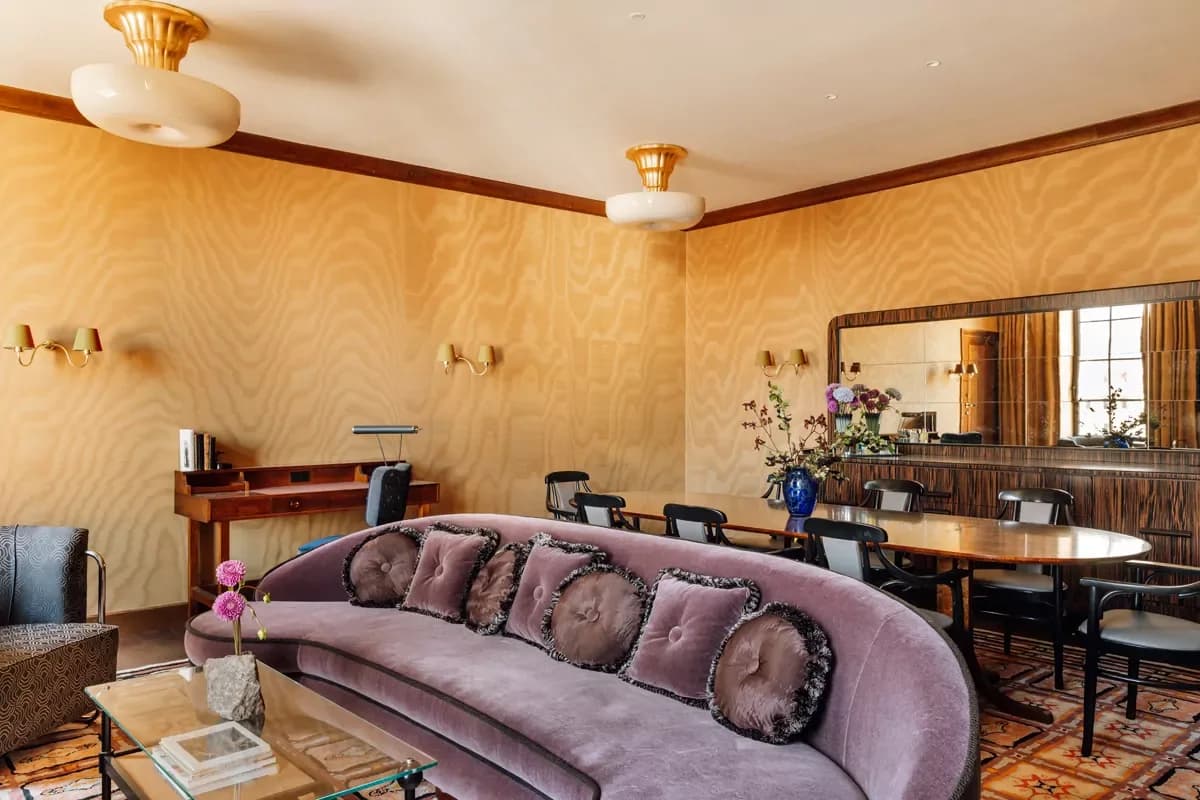
Conversely, inviting that same individual into the grand salon of a signature suite at a historic palace completely alters the psychological dynamic. The environment is instantly disarming. The presence of a crackling marble fireplace, custom mid-century velvet seating, and panoramic, unobstructed views over the London skyline, the Parisian rooftops, or the Tokyo Imperial Gardens softens the atmosphere. It transforms a rigid, adversarial business transaction into an intimate, peer-to-peer conversation. The host controls the environment completely, yet the guest feels deeply honored and valued by the exclusivity of the private invitation.
Architecturally, the best strategic suites are engineered precisely for this dual purpose, boasting a strict spatial hierarchy. The layout invariably begins with a formal entrance gallery and a dedicated guest powder room, ensuring that visiting executives or legal teams never cross into the private, residential sleeping quarters of the suite. The centerpiece is the grand salon, which must feature a monumental dining table—often crafted from solid walnut, rare Macassar ebony, or veined marbles—that effortlessly doubles as a commanding executive desk or a formal conference table for six to ten people.
Furthermore, the seating ergonomics are carefully calibrated. Sofas and armchairs in these grand salons possess firmer, slightly higher seat pitches, ensuring that executives in tailored suits do not sink awkwardly into deep lounge cushions during a serious discussion. By utilizing the suite as a private boardroom, the executive instantly projects a narrative of success, sophistication, and global fluidity. To master the art of organizing these critical summits, read our dedicated Fille Article: Behind Closed Doors: The Art of the Private Suite Meeting, where we outline the exact protocols for hosting a flawless executive gathering.
2. The Fortress of Confidentiality: Digital and Physical Security
At the highest levels of international finance, diplomacy, and corporate strategy, information is the most valuable currency on earth. The primary reason elite decision-makers abandon high-end public restaurants, private members' clubs, and even their own corporate headquarters for critical meetings is the absolute, uncompromising need for confidentiality.
When a multi-billion-dollar merger is being finalized, or when a high-profile CEO is being quietly interviewed to jump ship to a major competitor, the visual optics of the meeting cannot leak to the financial press or the stock markets. The strategic suite serves as a highly fortified, off-the-grid bunker. True luxury palaces understand that their primary product is not champagne; it is silence and discretion.
This requires an architecture of invisibility. The most coveted corporate suites are those that feature private, subterranean access protocols. Executives can arrive via underground garages in tinted vehicles, enter a secured, dedicated elevator requiring a physical key or an encrypted digital fob, and step directly into their suite without ever crossing the public lobby, facing the concierge desk, or being recorded by the paparazzi stationed outside the main revolving doors.
Once inside, the architecture must guarantee acoustic and digital invulnerability. Walls are lined with sound-absorbing materials, double-insulated doors seal the perimeters, and windows are triple-glazed with acoustic laminates to prevent long-range laser microphones from picking up ambient vibrations. Furthermore, elite properties provide secure, encrypted VLAN (Virtual Local Area Network) Wi-Fi specifically isolated from the hotel’s main server. This ensures that sensitive financial data, legal contracts, and digital presentations remain completely protected from corporate espionage. Hotels catering to this demographic also enforce strict Non-Disclosure Agreements (NDAs) for the specific butler team assigned to the suite.
3. The Executive Workation: Long-Stay Logistics and Cognitive Recovery
The concept of business travel has evolved far beyond the frantic, exhausting 48-hour cross-continental sprint. Today, the global elite frequently practice "Workations"—extended stays lasting several weeks where intense corporate productivity is seamlessly blended with periods of high-end leisure, family time, and cultural immersion. This operational shift demands a completely new standard of suite ergonomics.
A suite cannot serve as a strategic headquarters if it merely features a tiny, glass-topped vanity desk pushed into a dark corner of the bedroom. The modern executive requires a comprehensive, highly functional infrastructure. First and foremost is the integration of flawless connectivity and lighting. The suite must possess abundant, intuitively placed international power outlets built directly into the main table, high-speed symmetrical internet capable of supporting flawless global video conferences, and neutral, front-facing LED lighting designed specifically to make the executive look sharp and rested on a digital screen. For a comprehensive breakdown of desk ergonomics and connectivity, consult our detailed guide: The Mobile Corner Office: How to Work Effectively in a Luxury Suite.
For the long-stay executive, logistical storage and cognitive recovery are equally critical. A C-suite leader arriving for a three-week summit travels with an extensive wardrobe of tailored suits, formal wear, and casual attire. The suite must feature a massive, climate-controlled walk-in dressing room with proper cedar hangers, dedicated watch and jewelry winders, and professional lighting for grooming.
Equally important is the integration of private wellness. To sustain high-level decision-making over a long stay, executives require in-suite cognitive recovery tools. The best workation suites now feature dedicated fitness alcoves with private Peloton bikes or Technogym equipment, oversized steam hammams for end-of-day decompression, and circadian-rhythm lighting systems that naturally regulate melatonin production across global time zones. Furthermore, fully integrated private kitchens or concealed butler pantries allow the executive to maintain strict dietary regimens, employing a private chef without ever interrupting the workflow in the main salon. To discover how the world’s most demanding leaders merge peak productivity with residential comfort, read our comprehensive guide: The Workation Paradigm: Blending Executive Long Stays with Leisure.
4. The Ephemeral Stage: Showrooms, Shoots, and Brand Events
The strategic suite is not exclusively the domain of the financial or tech executive; it is a critical, high-yielding instrument for the global luxury, fashion, media, and creative industries. For high-end brands, the traditional retail boutique or the sterile, white-box photographic studio is often wildly insufficient for launching a highly exclusive product, hosting a VIP press junket, or conducting an intimate haute couture fitting.
Instead, the world’s most prestigious brands rent signature palace suites, transforming them into mesmerizing ephemeral showrooms. When a Swiss Haute Horlogerie brand needs to present a two-million-dollar grand complication timepiece to a select group of five private collectors, they do not do it in a crowded boutique. They rent a heritage penthouse suite at the Ritz in Paris or the Bvlgari Hotel in London. The suite provides a majestic, highly controlled narrative backdrop. The heavy silk draperies, the classical moldings, and the curated art collections on the walls instantly elevate the perceived value of the product being displayed, wrapping the commercial transaction in a halo of residential exclusivity.
These spaces are also the preferred stages for high-end editorial photoshoots, film press junkets, and celebrity styling sessions. However, utilizing a suite for these purposes requires heavy logistical support. The suite must have access to wide service elevators capable of transporting rolling wardrobe racks, heavy camera equipment, and lighting rigs without passing through the main lobby. It requires upgraded electrical load capacities to handle professional continuous lighting without tripping breakers, and a separate catering zone to feed a twenty-person crew without disturbing the VIP talent resting in the master bedroom. To dive deeply into the economics and operational secrets of brand takeovers, explore our specialized feature: The Ephemeral Stage: Organizing Showrooms, Shoots, and Brand Events in Luxury Suites.
5. The Corporate Calendar: Where to Command
To leverage the strategic suite effectively, one must understand the distinct corporate geography of the world's most powerful cities. The requirements of a suite change drastically depending on the financial and cultural ecosystem of the destination. Here is how the global elite utilize specific properties to anchor their corporate presence.
The Financial Strongholds: London and Geneva
In cities dominated by high finance, wealth management, and private equity, the suite must project absolute, uncompromising authority, historical stability, and ironclad discretion. In London, executives frequently utilize the grand, wood-paneled suites at The Connaught or the sleek, contemporary penthouses at The Rosewood. These spaces offer the heavy, quiet gravitas required to close major banking deals. In Geneva, the global hub of diplomacy and family offices, securing a suite at The Woodward or the Four Seasons Hôtel des Bergues provides the ultimate neutral, highly secure ground for international negotiations.
The Creative and Media Hubs: New York and Los Angeles
In the fast-paced arenas of media, entertainment, and advertising, the strategic suite must be visually spectacular, projecting forward-thinking dynamism and cultural relevance. In New York, the sprawling terrace suites at The Mark Hotel on the Upper East Side or the hyper-minimalist sanctuaries at Aman New York serve as the perfect stages for high-profile PR interviews, celebrity styling sessions, and tech startup acquisitions. The aesthetic must be sharp, highly photogenic, and instantly recognizable to the cultural elite.
The Tech & Innovation Fortresses: Silicon Valley and Dubai
For the modern tech billionaire and global innovator, the suite must blend raw futuristic design with unparalleled technological capability. In Silicon Valley, properties like the Rosewood Sand Hill serve as the unofficial boardrooms for venture capitalists, offering sprawling, residential-style suites with massive outdoor terraces perfect for discrete, open-air pitches. Meanwhile, in Dubai, the nexus of new global capital, suites at Atlantis The Royal or the Burj Al Arab offer jaw-dropping scale, private infinity pools, and architectural audacity, designed specifically to awe prospective investors and host monumental celebratory events after a successful IPO.
The Corporate Asian Hubs: Tokyo and Hong Kong
In the Asian megalopolises, where business culture is deeply rooted in respect, hierarchy, and flawless hospitality, the suite serves as the ultimate gesture of honor toward a visiting client or partner. The suites at Aman Tokyo—with their vast, silent volumes of washi paper and basalt stone—offer a profound sense of Zen-like focus high above the chaotic financial district. In Hong Kong, the signature suites at The Upper House or The Peninsula provide the technological supremacy and sweeping harbor views necessary to command the Asian market.
6. The Aesthete's Insight: The Pitfalls of Corporate Booking
At La Suite, we evaluate luxury spaces through an uncompromising, clinical lens. While the marketing brochures of five-star hotels will gladly pitch any large room as a "business suite," the operational reality is often drastically different. Booking a suite for high-level corporate use based solely on aesthetics is a dangerous gamble that can actively sabotage a critical business trip, a major presentation, or a confidential meeting.
The most frequent and catastrophic failure of the so-called corporate suite is technological and ergonomic incompetence. Many renowned interior designers prioritize visual symmetry and conceptual art over basic human utility. We regularly audit highly expensive suites where the primary desk is an incredibly beautiful, yet totally non-functional, piece of antique furniture with zero integrated power outlets or cable management. Worse, we frequently encounter suites featuring highly reflective glass tables positioned directly beneath harsh, un-dimmable overhead spotlights—a fatal combination that creates terrible glare during vital international video calls and causes severe eye strain during long hours of deep work.
Another major pitfall is the illusion of privacy and poor acoustic management. A suite cannot function as a boardroom if it features an open-plan layout. If the master bed is visible from the salon seating area, you cannot invite a client, an investor, or a legal team into the space; it crosses a boundary of intimacy that makes professional negotiations deeply uncomfortable. Furthermore, many historic properties suffer from terrible acoustic insulation. If you can hear the housekeeping carts rattling in the hallway, or the music from the suite next door, your confidential M&A discussions are severely compromised.
Finally, the "Phantom Butler" dilemma is a crucial consideration. In high-stakes corporate suites, service must be invisible but instantly accessible. Poorly trained staff who constantly interrupt a meeting to offer water, or conversely, staff who cannot be reached when a critical document needs immediate printing, can ruin the flow of a negotiation.
Our professional directive for the corporate traveler is absolute: never assume that a high price tag guarantees a functional workspace. Before booking a suite for strategic use, you must verify the exact floor plan (insisting on a true physical wall between the living and sleeping quarters), confirm the presence of an ergonomic workspace with accessible international power, and demand explicit guarantees regarding the speed and security of the network. For critical business travel, leave the hyper-conceptual, highly decorative spaces for leisure weekends, and invest your corporate capital in properties designed by architects who understand the brutal, demanding reality of the modern executive workflow.
Frequently Asked Questions
Can I legally host a business meeting or a brand showroom in a standard luxury hotel suite?
Yes, but it depends entirely on the scale of the gathering and the hotel's specific operational policies. Hosting a private meeting for four to six people in your suite's grand salon is standard practice and universally accepted. However, if you plan to transform the suite into a commercial showroom with rolling garment racks, bring in a professional photography crew with heavy lighting equipment, or host a cocktail reception for twenty clients, you must declare this to the hotel in advance. Hotels usually charge a "commercial use" or "event fee" supplement, as this drastically increases foot traffic, security requirements, and wear-and-tear on the furnishings.
How do I handle NDA protocols and staff confidentiality when hosting a highly sensitive board meeting in a suite?
When booking at an ultra-luxury level, you must communicate your security needs to the Director of VIP Services or the General Manager before arrival. Elite properties will assign a dedicated, singular butler or a restricted team to your suite, rather than allowing rotating shifts of room service staff to enter. You can request that these specific staff members sign your corporate Non-Disclosure Agreements (NDAs). Furthermore, you can request that the suite be serviced only during specific windows when the room is vacant, ensuring no hotel staff are present during active negotiations or while sensitive documents are exposed.
What is the functional difference between a Junior Suite and a true Executive/One-Bedroom Suite for business purposes?
This is the most critical distinction in corporate booking. A "Junior Suite" is merely a very large, single open-plan room where the bed and the living area share the same volume of space. You cannot host a professional meeting in a Junior Suite without making your guests feel as though they are standing in your bedroom. A true "One-Bedroom Suite" or "Executive Suite" features a solid physical wall and a closing door between the grand salon (the public workspace and hosting area) and the master bedroom (the private sanctuary), allowing you to host clients securely without compromising your personal privacy.
Are luxury hotel suites considered a tax-deductible corporate expense?
While La Suite does not provide formal financial or legal advice, in many global jurisdictions, if a suite is rented explicitly for the purpose of hosting a documented business meeting, a product launch, an executive off-site, or a media interview, the cost can be partially or fully expensed as a legitimate business operation or marketing cost. Savvy corporate travel managers frequently book large suites instead of renting external convention spaces or meeting rooms, as it provides both the impressive event venue and the executive's overnight accommodation under a single, highly efficient invoice.
Conclusion: The Ultimate Corporate Asset
The modern executive landscape is defined by speed, mobility, and the relentless pursuit of competitive advantage. In this hyper-connected environment, the luxury hotel suite has transcended its original, passive purpose of providing a comfortable night's sleep. It has become a potent, multi-functional corporate asset. Whether it is utilized as a silent, technologically advanced sanctuary to draft a critical keynote speech, a fortified bunker to finalize a global merger, or a dazzling stage to launch a high-end luxury collection, the strategic suite offers an unparalleled combination of prestige, absolute privacy, and operational power.
When you book a signature suite, you are not merely reserving a room; you are securing a temporary, highly effective global headquarters. To master this executive lifestyle and locate the exact architectural volumes that will elevate your next corporate mission, we invite you to explore our comprehensive network of business-focused design guides and unfiltered operational reviews. In the highest echelons of global commerce, the right environment does not just host the meeting—it helps you command the room and close the deal.