






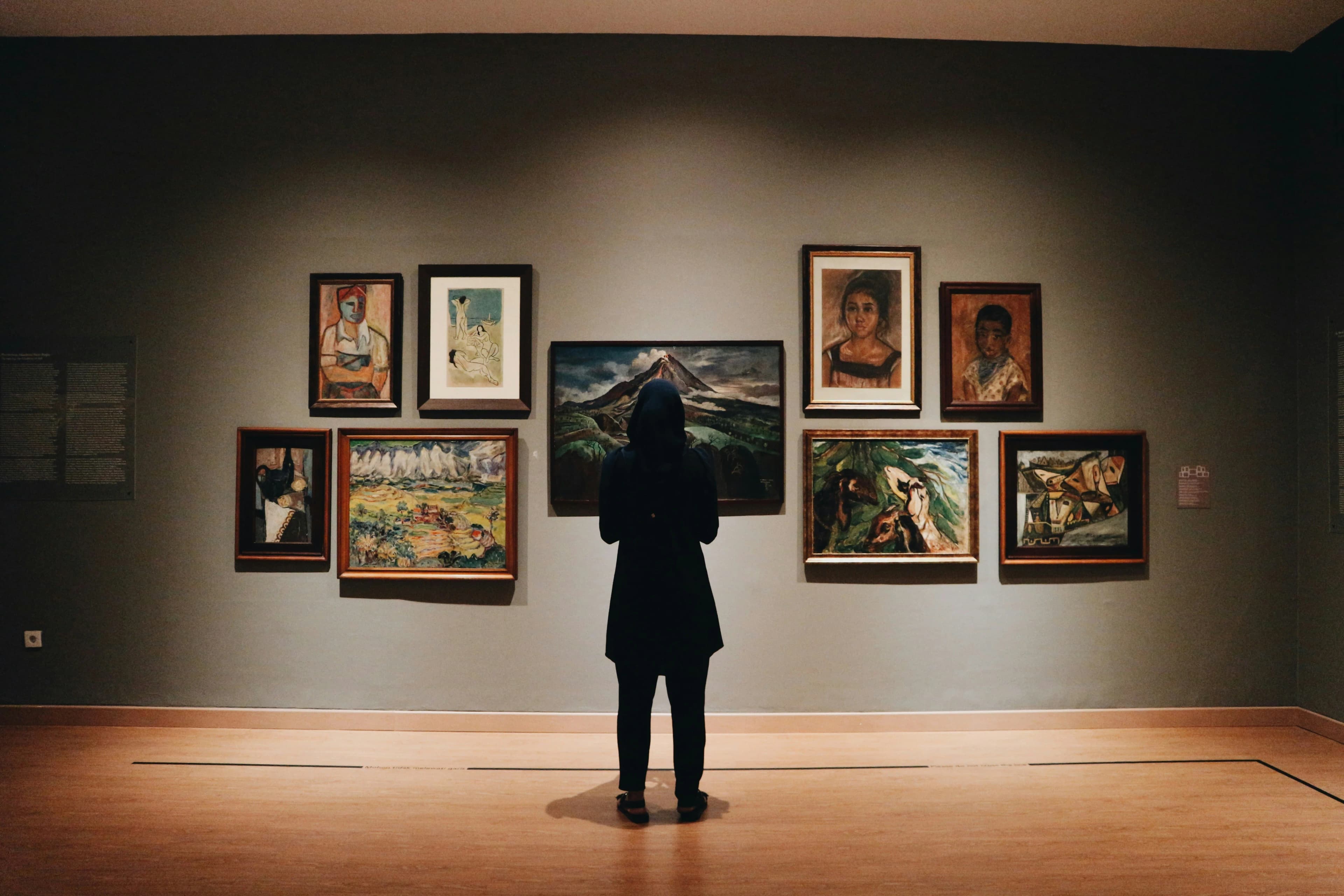
The Gallery Suite: When Art Becomes the Host
BY Jules PEULET
The ultimate luxury is no longer optical; it is intellectual. This foundational guide decodes the rise of the Gallery Suite, exploring the shift from passive hotel decoration to museum-grade curation, site-specific artist collaborations, and rare libraries that physically and psychologically transform a transient commercial space into a profound cultural sanctuary.
For generations, the global hospitality industry operated under a highly conservative, strictly risk-averse visual philosophy regarding art. In the traditional five-star paradigm, artwork was treated as a passive, decorative afterthought—a purely cosmetic layer designed to blend seamlessly into the wallpaper. Hoteliers routinely commissioned generic, mass-produced prints or innocuous, non-committal abstract canvases that were specifically color-matched to the upholstery, the carpet tones, and the drapery. The operational goal was universal inoffensiveness; the art was engineered to be completely ignored, ensuring it never challenged, provoked, or intellectually engaged the guest. The space remained culturally silent, serving as a sterile backdrop rather than an active catalyst for human emotion.
Today, within the ultra-luxury sector, that uninspiring paradigm has been entirely dismantled. The modern elite traveler—frequently an active art collector, a major patron of cultural institutions, or a creative visionary in their own right—rejects the predictable banality of standard hotel decor. They demand intellectual stimulation, historical weight, and cultural authenticity from the environments they choose to inhabit. Consequently, the world’s most visionary hoteliers have stopped acting merely as hospitality managers and have adopted the rigorous, uncompromising role of fine art gallerists and cultural curators.
We have officially entered the era of the Gallery Suite. In these unparalleled architectural spaces, art is no longer an accessory to the room; the room is structurally built to serve the art. Original museum-grade masterpieces, site-specific contemporary commissions, and meticulously curated libraries of rare literature form the primary core identity of the layout. Living alongside original art fundamentally alters the resident's psychological relationship with the space, transforming a transient commercial hotel room into a deeply rooted, culturally profound sanctuary. This comprehensive guide deconstructs the rise of the Gallery Suite, exploring how private collections, avant-garde artist collaborations, and intellectual curation are redefining the very essence of the high-end travel experience.
1. The Curated Canvas: Private Collections and Museum-Grade Curation
To truly understand the internal value of the Gallery Suite, one must first recognize the profound professional difference between interior decoration and authentic art curation. Decoration seeks visual harmony and aesthetic compliance; curation seeks structural narrative, deep historical provenance, and an active emotional dialogue. The most exceptional luxury properties in the world no longer source their artwork from commercial hospitality catalogs or corporate art consultants. Instead, they leverage the private, multi-million-dollar art collections of their owners to radically elevate the guest experience.
When a guest enters a signature suite at a property like The Dolder Grand in Zurich, they are not greeted by generic wall coverings. They are sharing their private living quarters with original canvases by Salvador Dalí, Takashi Murakami, Joan Miró, or monumental sculptures by Fernando Botero. The suite effectively becomes an exclusive, ticketless private museum where the boundaries between public gallery and residential intimacy dissolve.
The physical presence of an original, authenticated masterpiece carries a distinct weight that alters the room's atmospheric frequency. The tactile reality of the artist's brushstrokes, the visible depth of the oil pigments, and the historical gravity of the canvas completely redefine the room's proportions, demanding attention and commanding a level of reverence that no piece of mass-manufactured luxury furniture ever could.
This curatorial rigor extends far beyond merely hanging an expensive painting on a focal wall. True gallery suites are curated with a strict thematic or geographical narrative that reflects the destination's identity. At Ellerman House in Cape Town, the private suites and villas are strictly curated to showcase the most comprehensive private collection of South African art in the world, spanning over two centuries of the nation's complex history.
From the historic landscapes of Thomas Bowler to the contemporary masterpieces of visual artists working today, the art serves as the primary storyteller, providing the international guest with a profound, unmediated connection to the cultural soul of South Africa. For the high-net-worth traveler, residing among such pieces transforms the stay into an educational immersion, reflecting and expanding their own cultural literacy. To explore the complex mechanics of how global hoteliers acquire, preserve, and display these priceless assets, read our dedicated Fille Article, Private Collections and Curation: How Luxury Suites Became Private Museums, where we detail the finest in-room art collections available for booking today.
2. The Artist in Residence: Site-Specific Collaborations
While the strategic placement of historical masterpieces offers a sense of profound legacy, another avant-garde movement is actively reshaping the architecture of the Gallery Suite: the rise of direct, site-specific collaborations between elite hotels and living contemporary artists. In this dynamic, forward-thinking model, the art is not imported and hung on the walls at the end of construction; the art is physically integrated into the structural DNA of the suite itself. The artist is commissioned to treat the architectural volume as a blank three-dimensional canvas, resulting in a completely unrepeatable, immersive environment.
The most radical and globally recognized example of this philosophy is ROOM at The Beaumont in London, conceived by the legendary British sculptor Sir Antony Gormley. Gormley did not simply design a piece of sculpture to sit inside an executive suite; he designed the suite itself as a monumental, three-dimensional piece of art. From the exterior of the Mayfair hotel, the suite appears as a massive, cubist stainless-steel figure crouching on the building’s historic facade.
From the inside, the master bedroom is a dark, wood-paneled cavern completely devoid of windows, engineered by the artist to induce a deeply meditative, womb-like state of sensory deprivation and absolute psychological peace. The guest does not just look at the art; they literally sleep inside the mind of the sculptor, experiencing a profound architectural filter against urban chaos.
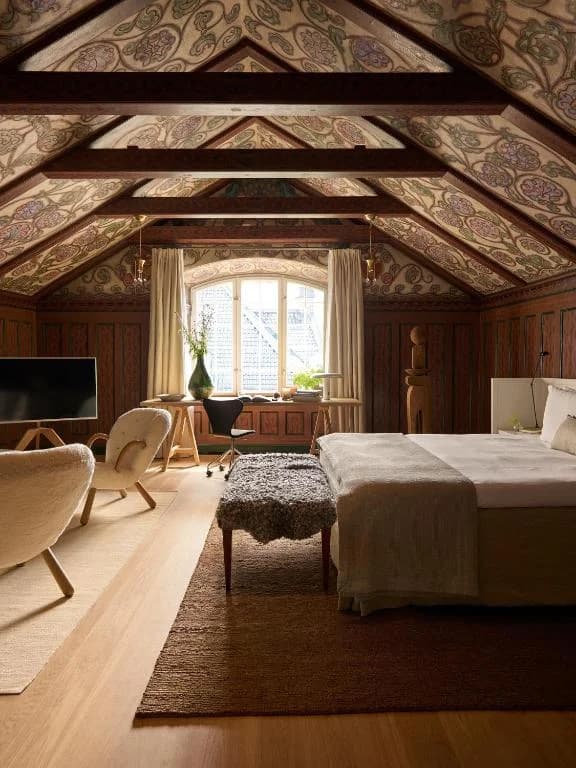
Beyond such monumental structural interventions, modern palaces are increasingly resurrecting the historic Renaissance tradition of the "Artist in Residence." Properties invite prominent contemporary painters, muralists, and sculptors to live on-site and create bespoke works directly onto the plaster walls or ceiling vaults of the signature suites.
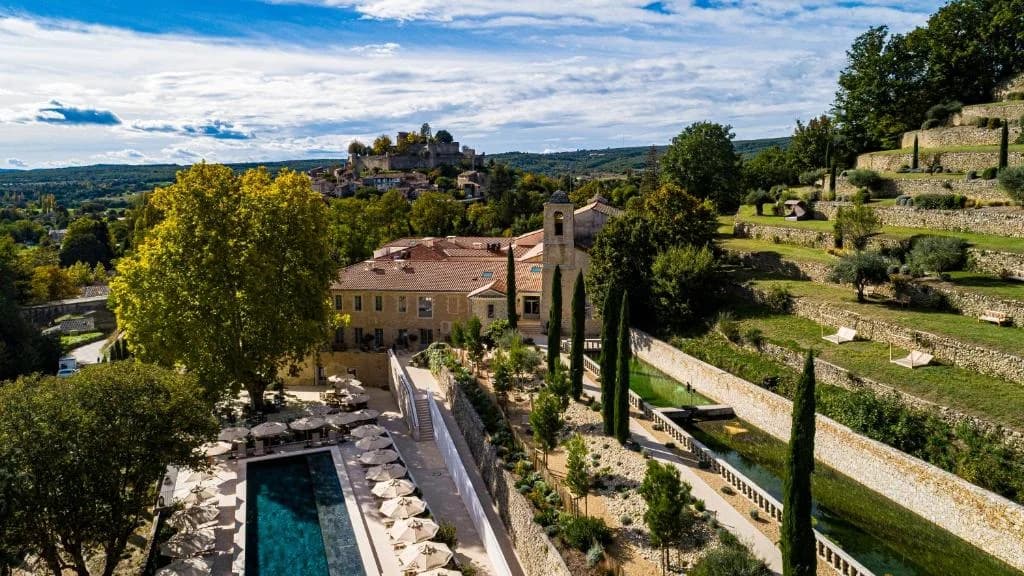
At La Colombe d'Or in Saint-Paul de Vence, this living heritage is embedded in the walls, where masterpieces by Picasso, Matisse, and Braque remain in the exact rooms where they were created. This model creates a living, breathing cultural ecosystem. A suite featuring a hand-painted, floor-to-ceiling fresco by a rising contemporary star offers an entirely different emotional frequency than a room with framed reproductions. It provides the resident with the visceral thrill of inhabiting a space born from active, modern creation. To discover the most daring architectural interventions and bespoke artistic commissions in modern hospitality, delve into our comprehensive guide, Collaborations with Artists: Sleeping Inside Site-Specific Masterpieces, which maps the world's most innovative art-driven hotel rooms.
3. The Intellectual Sanctuary: Rare Books and Cultivated Objects
True luxury art de vivre is not confined solely to the visual arts; it encompasses the complete intellectual and cognitive nourishment of the resident. A suite that boasts exceptional architecture and beautiful paintings but lacks literary depth often feels emotionally hollow—like a beautiful stage set waiting for a script. To counter this, the most sophisticated curators in modern hospitality are transforming luxury suites into authentic intellectual sanctuaries through the rigorous curation of rare books, first editions, and historical objects of curiosity.
The integration of a private, custom-curated library is the ultimate marker of true residential authenticity. It signals to the guest that the suite is designed not just for physical rest, but for deep cognitive engagement and slow contemplation. When designing the signature suites at Rosewood London or the legendary historic apartments at The Taj Mahal Palace in Mumbai, curators completely reject the practice of buying books by the meter just to fill empty shelf space with pleasing colors.
Instead, they employ specialized literary concierges and antiquarian book dealers to source rare folios, vintage travel logs, oversized Assouline art books, and leather-bound first editions that reflect the specific cultural, political, and architectural history of the city.
The presence of a curated library fundamentally alters the pace of the guest’s behavior, slowing down the nervous system. It invites the resident to pour a glass of vintage cognac, turn off their digital devices, and engage with the tactile, analog pleasure of turning the heavy, deckle-edged pages of a rare architectural volume. Furthermore, these literary collections are often complemented by rare, curated objects of curiosity: antique brass astrolabes, vintage Leica cameras, or hand-carved ebony chess sets.
These objects are not locked behind glass museum vitrines; they are placed strategically on bespoke timber desks to be touched, used, and appreciated. This meticulous layering of literature and historical artifacts transforms the suite from a commercial space into the private study of an erudite global explorer. For a deep dive into how literary concierges and interior architects build these profound spaces of thought, explore our dedicated feature, The Intellectual Sanctuary: Rare Books, Libraries, and Cultivated Objects in Elite Suites.
4. Beyond the Frame: Private Cultural Experiences
The true Gallery Suite is not a static, isolated environment; it serves as a dynamic, interactive gateway to the broader cultural ecosystem of the host city. For the elite traveler, the art on the walls is merely the starting point of a much deeper cultural journey. The ultimate luxury becomes exclusive, frictionless access to the cultural world, facilitated directly from the private sanctuary of their suite. Hoteliers have recognized that they must offer experiential curation that extends far beyond the physical frame of a painting, creating highly personalized memories.
This operational shift has given rise to the "Cultural Concierge"—a highly specialized hospitality professional who operates more like a private art broker, historian, or gallery director than a standard hotel employee. When a guest books a top-tier Gallery Suite at properties like Le Bristol in Paris or The Savoy in London, this concierge curates a bespoke cultural itinerary that remains entirely inaccessible to the general public.
This can include arranging for a prominent local gallery director to bring a selection of contemporary canvases directly to the suite for a private, in-room viewing and acquisition session, allowing the guest to purchase art in total privacy while sipping champagne in the comfort of their master salon.
Moreover, the suite becomes the launchpad for extraordinary VIP cultural experiences across the metropolis. These elite properties leverage their immense institutional power to grant their top-tier suite guests after-hours, completely private access to world-class institutions like the Louvre or the Uffizi Gallery, or exclusive backstage passes to the Opera.
In some instances, the culture is brought directly into the suite’s grand salon: organizing a private, acoustic performance by a classical string quartet, or hosting an intimate, multi-course dinner where the guest is seated alongside a renowned local author or contemporary artist. By merging the private residential space with the vibrant cultural heartbeat of the city, the hotel ensures that the guest's intellectual curiosity is constantly fed. To explore how the world’s finest properties orchestrate these hyper-exclusive cultural moments, read our definitive guide, Private Cultural Experiences: How the Suite Becomes the Ultimate Key to the City.
5. The Psychological Impact of Living with Art
The decision to elevate a suite with museum-grade art and rare literature is not merely an aesthetic choice; it is a profound, clinically validated psychological strategy. Humans respond viscerally and neurologically to the textures, forms, and colors of their environments. A standard, highly corporate hotel room—regardless of its square footage or the cost of its marble—often induces a state of transient detachment. It feels temporary, predictable, and commercial, which subconsciously keeps the high-profile guest in a state of alert, untethered isolation.
Introducing authentic art into this space fundamentally changes the cognitive frequency of the room, lowering stress and triggering a state of deep mindfulness. Art demands pause. It requires the viewer to slow down, to engage in visual decoding, and to sit in contemplation. When a corporate executive or creative leader returns to their suite after a grueling day of high-stakes negotiations or public visibility, the presence of a serene, original landscape painting or a complex abstract sculpture acts as a powerful cognitive interrupter. It pulls the mind away from the relentless anxieties of the business world and anchors it in the present moment, lowering cortisol levels through visual silence.
Furthermore, art humanizes the monumental scale of contemporary luxury architecture. A massive, high-ceilinged grand salon can easily feel cold, imposing, and hollow. However, when an original, highly textured canvas is hung on the wall, it introduces the invisible presence of the artist. It brings a sense of human vulnerability, passion, and artisanal warmth into the room, making the vast space feel intimately residential.
The guest no longer feels like a temporary occupant of a commercial asset; they feel like an invited custodian of a cultural treasure. This psychological shift—from consumption to contemplation—is the ultimate luxury provided by the Gallery Suite. It transforms the hospitality experience from a physical service into a profound emotional resonance that lingers long after checkout.
6. The Aesthete's Insight: The Pitfalls of "Art-Washing"
At La Suite, our curatorial mandate requires us to look beyond the glossy narratives of hotel marketing departments and evaluate luxury hospitality through a strictly critical, clinical lens. As the concept of the "art hotel" has gained massive global popularity over the last decade, it has unfortunately birthed the problematic phenomenon of "art-washing"—where properties use the mere presence of art as a cynical marketing gimmick without executing the rigorous curatorial or architectural standards required to respect the works or the guest.
The most frequent and catastrophic failure we observe in poorly executed Gallery Suites is lighting incompetence. An original oil painting or a delicate watercolor requires precise, highly calibrated photon management to reveal its true depth. We frequently audit extremely expensive suites where multi-million-dollar canvases are illuminated by cheap, high-glare halogen spotlights that create terrible reflections, or where the Color Rendering Index (CRI) of the LED bulbs is so low that the vibrant colors of a masterpiece appear muddy and dead. If the hotel does not invest in gallery-standard architectural lighting—such as ERCO framing projectors that perfectly illuminate the canvas without spilling light onto the surrounding wall—the presence of the art is completely wasted.
Another critical pitfall is spatial overcrowding and the total sacrifice of human ergonomics. In an eager attempt to impress guests with the scale of their collection, some hoteliers clutter the suite, transforming it into a claustrophobic antique shop or an over-stuffed gallery. When a guest has to carefully navigate sideways around a fragile, un-pedestaled bronze sculpture just to reach the minibar or the terrace doors, the art ceases to be a luxury and becomes a source of profound physical anxiety. A hotel suite must remain, first and foremost, a functional, highly operational living space where human movement flows naturally.
Finally, we regularly critique the rigid, hostile "Do Not Touch" atmosphere found in corporate art hotels. True residential luxury requires absolute ease and psychological comfort. If a suite is filled with rare objects but plastered with passive-aggressive placards warning the guest not to touch the books, adjust the lighting, or sit too close to the art, the interior architecture fails. The illusion of a private sanctuary shatters instantly, and the guest is reduced from a respected resident to an untrusted museum patron monitored by staff.
Our professional guidance for the discerning cultural traveler is definitive: seek out properties where the art curation feels organic, structurally integrated, and effortlessly generous. Avoid hotels that use art as a fragile, heavily policed prop, and invest your time in suites where the masterpieces are allowed to breathe, inviting you to live alongside them in total, uncompromised comfort. These clinical evaluations serve as the launchpad for our highly specialized Granddaughter Articles, which offer raw, unfiltered, single-suite reviews completely stripped of PR filters.
The Curation Hub: The World’s Ultimate Gallery Suites
To truly experience the intersection of high-end hospitality, fine art, and cultivated living, one must know exactly where to look. Here is a curated selection of properties that have flawlessly mastered the execution of the Gallery Suite:
The Dolder Grand, Zurich (Switzerland): The undisputed titan of hotel art curation. Its signature suites house an awe-inspiring, museum-grade collection featuring over 100 works, including original pieces by Salvador Dalí, Henry Moore, and Joan Miró. The integration is seamless, elevated by flawless Swiss architectural lighting and deep spatial planning. ➡️ [Explore our full review of The Dolder Grand's Art Suites]
La Colombe d'Or, Saint-Paul de Vence (France): A legendary historic sanctuary where the art is inextricably linked to the hotel's bohemian legacy. The walls are adorned with original works by Picasso, Calder, and Matisse—artists who famously paid for their room and board with their creations. It offers an unparalleled, deeply emotional immersion into 20th-century art history. ➡️ [Discover the bohemian heritage of La Colombe d'Or]
The Beaumont, London (UK): Home to ROOM by Sir Antony Gormley. This is the ultimate example of site-specific artist collaboration, where the boundary between the suite’s structural architecture and contemporary sculptural art is completely, radically erased. ➡️ [Inside ROOM: The Beaumont's Living Sculpture]
Ellerman House, Cape Town (South Africa): A masterclass in geographic and cultural narrative. Its private suites and dedicated on-site gallery house the most important private collection of South African art, offering guests an exclusive, highly educated journey through the nation's complex artistic heritage. ➡️ [The South African Art Collection at Ellerman House]
The Fife Arms, Braemar (Scotland): An exercise in brilliant, narrative-driven maximalism. Owned by the founders of the powerhouse gallery Hauser & Wirth, the suites are densely curated with over 16,000 antiques and bespoke artworks, ranging from Queen Victoria’s watercolors to bold contemporary installations, creating a profoundly intellectual highland retreat. ➡️ [Hauser & Wirth's Hospitality Vision: The Fife Arms Full Audit]
Frequently Asked Questions
Are guests allowed to purchase the original artwork displayed in their luxury suites?
This depends entirely on the specific curation model of the property. In hotels that feature the owner's private, legacy collection (such as The Dolder Grand or Ellerman House), the art is considered a permanent asset and is strictly not for sale. However, an increasing number of modern luxury hotels operate in direct partnership with local contemporary galleries. In these "shoppable suites," the artwork is accompanied by discrete curatorial notes and pricing. If a guest connects with a piece during their stay, the Cultural Concierge facilitates a seamless, private acquisition, handling all customs logistics and shipping the canvas directly to the guest's primary residence.
How do ultra-luxury hotels insure and protect multi-million-dollar masterpieces located in guest rooms?
Protecting museum-grade art in a functional hospitality environment requires invisible, military-grade logistics. The works are covered by specialized fine art insurance policies that require strict environmental and security controls. The suites are equipped with completely concealed climate management systems that regulate humidity and temperature to preserve oil paints and delicate paper fibers. Furthermore, high-value canvases are secured to the walls using alarmed, tamper-proof museum brackets linked to the hotel's security matrix, and the window envelopes are treated with specialized UV-blocking films to prevent the degradation of pigments from natural sunlight.
Does the presence of high-end art justify a significant increase in the nightly room rate?
Yes, absolutely. The integration of original, museum-grade art significantly increases the capitalization and operational costs of the suite—including specialized fine art insurance premiums, museum-grade maintenance, climate control infrastructure, and dedicated curatorial staff. More importantly, it dramatically elevates the exclusivity, rarity, and prestige of the space. Elite travelers are not just paying for square footage or a bed; they are paying for the emotional privilege, the intellectual stimulation, and the distinct social currency of inhabiting an authentic, private cultural space.
What is the difference between a "themed suite" and a true "curated library suite"?
A themed suite relies entirely on superficial, theatrical set-design tactics—such as buying books by the yard based purely on the color of their spines to match the wallpaper, or scattering fake, mass-produced "vintage" objects around the room to create a corporate version of history. It feels inauthentic, hollow, and commercial. A true curated library suite is built with absolute curatorial integrity. The books are individually sourced first editions, meaningful monographs, or rare folios that relate directly to the history of the building, the host city, or a specific intellectual discipline. The focus is placed squarely on the content and the tactile quality of the literature, inviting true cognitive engagement.
Conclusion: The Architecture of the Mind
The ultimate luxury in modern travel is no longer the flawless execution of standard service; it is the curation of deep meaning and cultural authenticity. As the global hospitality industry becomes increasingly saturated with predictable, standardized opulence and generic brand formulas, the true sanctuaries of tomorrow will be defined exclusively by their intellectual and cultural weight. The Gallery Suite represents the absolute pinnacle of this aesthetic and philosophical evolution. By replacing passive decoration with museum-grade canvases, immersive artist collaborations, and rare literary collections, these spaces transcend their commercial origins.
When you book a true Gallery Suite, you are not merely securing a place to sleep; you are reserving a private museum, a personal library, and a quiet, fortified space for profound cognitive renewal. To discover the spaces that will challenge, inspire, and elevate your next journey, we invite you to explore our curated network of cultural suite reviews and independent artistic breakdowns. In the world of elite travel, the most beautiful spaces are not just meant to be seen—they are meant to be felt, read, and deeply understood.